Saturday, July 31, 2021

Advise of Nowsherwan


Advise of Nowsherwan

تین انگوٹھیاں، تین سو سال (ایک حکایت)

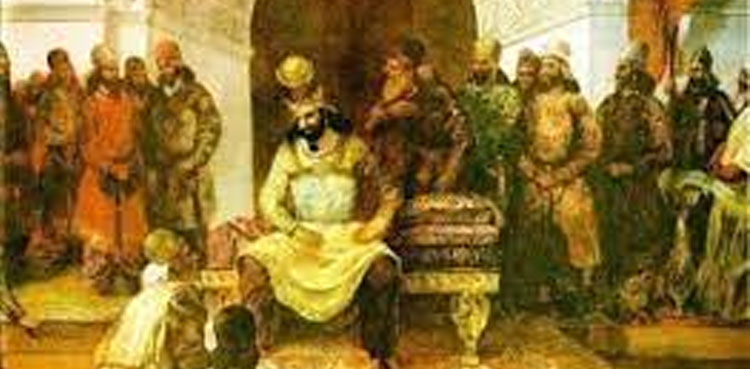
کہتے ہیں مشہور بادشاہ نوشیروان نے ایک عالی شان محل تعمیر کروانے کی غرض سے جس مقام اور جگہ کا انتخاب کیا، وہاں ایک بڑھیا کی جھونپڑی بھی تھی۔

معماروں نے بادشاہ کے حکم پر کام شروع کردیا، لیکن جیسے جیسے محل کی عمارت تعمیر کرتے گئے اور جب اس کی وسیع چار دیواری بنانے کا موقع آیا تو جھونپڑی ان کے منصوبے کی راہ میں رکاوٹ بن گئی۔

نوشیروان کو اس کا علم ہوا تو اس نے بڑھیا کو طلب کرکے اس سے کہا، ’’جو تیری مرضی ہو تو یہ جھونپڑی مجھے دے دے، اس کے بدلے جہاں کہیں تیری خوشی ہو، محل بنوا دوں گا۔‘‘

بڑھیا نے نہایت ادب اور عاجزی سے کہا، ’’مجھے اس سے زیادہ اور کس بات کی خوشی ہوگی ہے کہ اسی جگہ رہوں تو ہر روز آپ کا دیدار کرنے کا موقع ملے گا۔‘‘

بادشاہ نے کہا۔ ’’جیسے تیری خوشی بڑھیا، میں تجھ پر اس حوالے سے کوئی جبر نہیں کرتا۔‘‘ نوشیروان کے حکم پر جھونپڑی ویسی کی ویسی ہی رہی اور محل تعمیر کرلیا گیا۔ وہ جھونپڑی اب اس عالی شان قصر کے ایک طرف وسیع باغ کے احاطے میں آچکی تھی۔

اس بڑھیا کے پاس ایک گائے تھی، وہ آتے جاتے قصر شاہی میں گندگی کرتی، لیکن نوشیروان کچھ نہ کہتا۔ اس نے پہلے بھی بڑھیا پر جبر نہیں‌ کیا تھا اور بعد میں بھی اس کی ناگوار حرکت یا نالائقی پر اسے کچھ نہ کہتا۔ وزرا اور درباری نوشیروان کے ضبط و برداشت کے قائل ہو چکے تھے۔ اس کا عدل تو مشہور ہی تھا، اب اس کی برداشت اور تحمل مزاجی بھی ان کے سامنے تھی۔

جب نوشیروان نے اس منزلِ فانی سے کوچ کیا اور اس کی وفات کے لگ بھگ تین سو سال کے بعد ایک بادشاہ کسی سبب اپنے مصاحبوں سمیت اس کی قبر پر آیا اور اس کے مرقد کو کھودا تو دیکھا کہ اس کا مردہ جسم گویا گہری نیند میں ہے، اور اس کی انگلی میں بڑی جواہر جڑی انگوٹھیاں موجود ہیں جن پر تین نصیحتیں لکھی ہوئی ہیں۔

ایک انگوٹھی پر لکھا تھا، ’’دوست دشمن سب سے دار مدار رکھو۔‘‘

دوسری پر ’’سب کام مشاورت سے کرو۔‘‘ اور تیسری پر نقش عبارت تھی ’’ قناعت پکڑو۔‘‘

تب اس بادشاہ نے اپنے وزیروں اور مصاحبوں کی طرف دیکھا اور کہا کہ نوشیروان نے ان نصیحتوں پر خوب عمل کیا اور یہی وجہ ہے کہ آج تین سو برس بعد بھی ان کا عدل و انصاف اور رحم دلی مشہور ہے۔

Hindustan - 1857 War of Independence, when there was death everywhere at Rajh Gath


Hind - 1857 when there was death everywhere at Rajh Gath

جب راج گھاٹ پر ہر طرف موت کا راج تھا!

فارسی اورعربی کے قابلِ قدر عالم، شارح اور استاد شاعر کی الم ناک داستان جنھیں اپنے خاندان کے 21 اقربا کے ساتھ قتل کردیا گیا

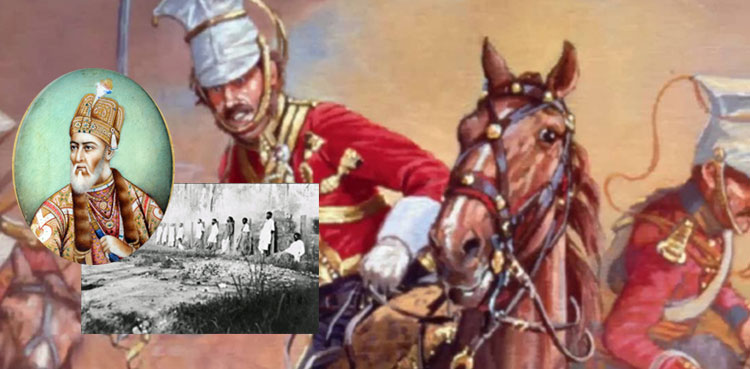
1857ء میں جب ہندوستان کے آخری مغل بادشاہ بہادر شاہ ظفر کی رعایا نے انگریزوں سے باقاعدہ لڑائی کا آغاز کیا تو اسے تاجِ برطانیہ سے بغاوت، سرکشی اور بدعہدی قرار دیا گیا اور بغاوت کو کچلنے کے لیے بے دریغ قتلِ عام شروع کردیا گیا۔

گرفتار ہوجانے والے آزادی کے متوالوں کو ہنگامہ آرائی اور بلوہ کرنے کے الزام میں بدترین تشدّد، قید و بند اور جلاوطنی جھیلنا پڑی۔ انھیں پھانسیاں دی گئیں اور ‘باغی قیادت’ کو نشانِ عبرت بنانے کے لیے توپ دَم کیا گیا۔ غدر میں کتنے ہی لوگ مارے گئے جن میں‌ نابغۂ روزگار شخصیات، عظیم و نادر ہستیاں بھی شامل تھیں۔

اس تمہید کے ساتھ شیخ امام بخش صہبائی کا تعارف پڑھ لیجیے جس کے بعد ہم موصوف اور ان کے خاندان پر بروزِ غدر ٹوٹ پڑنے والی قیامت کا تذکرہ کریں گے۔

شیخ امام بخش صہبائی انیسویں صدی کے فارسی زبان و ادب کے ایک قابلِ قدر عالم، شارح اور شاعر تھے۔ عربی پر بھی عبور رکھتے تھے۔ دہلی ان کا وطن تھا۔ ان کی درست تاریخ و سنِ پیدائش تو کسی کو معلوم نہیں، لیکن غالب قیاس یہی ہے کہ انھوں نے 1805ء میں پیدا ہوئے تھے۔ صہبائی زندگی کی 54 (چوّن) بہاریں دیکھ سکے اور غدر میں‌ ابتلا کے بعد فریبِ ہستی سے واقف ہوئے۔

صہبائی صاحب کے دو بیٹے محمد عبدُالعزیز اور عبدُالکریم اپنے والد کے تابع فرمان اور مذہب پسند بھی تھے، شوق و ذوقِ علم اور سخن فہمی تو ورثے میں ملی تھی۔ یہ دونوں بھی عزیز اور سوز کے تخلّص سے شاعر مشہور تھے۔

شیخ امام بخش صہبائی نے گو کہ مختصر عمر پائی، مگر فارسی میں نظم و نثر کی لگ بھگ تیس اور اردو زبان میں تین کتابیں تصنیف کیں۔ ان کی کتب نایاب ہیں اور ان کا کوئی سراغ نہیں ملتا۔

ان کے زمانے میں اگرچہ فارسی کی جگہ اردو لے چکی تھی، لیکن صہبائی نے نثر اور نظم کے لیے فارسی ہی کو اپنایا۔ انھیں اس زبان میں کمال حاصل تھا اور وہ اپنی فارسی دانی کے لیے مشہور تھے۔ انھیں دہلی کالج میں فارسی کا مدرّس مقرر کیا گیا تھا۔

افسوس کہ اس نادرِ روزگار کا انجام بڑا دردناک ہوا۔ تذکروں میں آیا ہے کہ غدر کے موقع پر ستمبر میں انگریزوں کے ہاتھوں گرفتار ہوئے اور اپنے 21 اعزّہ سمیت بے دردی سے قتل کیے گئے۔

رام بابو سکسینہ کی مشہور اور مستند کتاب تاریخِ ادبِ اردو کے دوسرے حصّے میں ان کا ذکر موجود ہے۔ رام بابو سکسینہ لکھتے ہیں:

’’صہبائی قدیم دلّی کالج میں فارسی اور عربی کے پروفیسر، بہت روشن خیال اور اخلاقی جرأت کے آدمی تھے۔ فارسی میں ان کو کمال حاصل تھا اور اس زمانے میں جب کہ فارسی کا دور دورہ تھا ایک خاص عزّت اور قدر کی نگاہ سے دیکھے جاتے تھے اور ان کی قابلیت اور شہرت کا طلبا کے دل پر بڑا اثر تھا۔ فنِ شعر میں استاد مشہور تھے اور قلعہ کے اکثر شاہ زادے اور متوسلین ان سے اصلاح لیا کرتے تھے۔ متعدد کتابیں ان سے یادگار ہیں۔ زمانۂ غدر میں مارے گئے اور ان کا مکان کھود کر زمین کے برابر کر دیا گیا۔‘‘

صہبائی کے احباب و رفقا میں مولانا فضلِ حق خیر آبادی، مفتی صدر الدّین خان آزردہ، سر سیّد احمد خان، ذوق، مومن اور غالب شامل تھے اور انھیں بہادر شاہ ظفر کا تقرّب بھی حاصل تھا۔

مشہور ہے کہ ان کے شاگردوں میں غیر مسلم نمایاں تعداد میں‌ تھے اور ان کی شہادت کو دو دہائیاں گزرنے کے بعد جب ان کے ایک ہندو شاگرد منشی دین دیال نے ان کے علمی اثاثے کی ترتیب و تدوین کا اہتمام کرنا چاہا تو ملال ہوا کہ ان کی بعض تصانیف کا کوئی سراغ سراغ نہ مل سکا اور نہ ہی ان کے مکمل کوائف اور زندگی کے جامع حالات اکٹھے کیے جاسکے۔ جتنی کتابیں مل سکیں انھیں تین جلدوں‌ میں‌ زیورِ طبع سے آراستہ کردیا گیا۔

امام بخش صہبائیؔ دہلوی سے سَر سیّد احمد خاں نے اپنی مشہور کتاب ’’آثارُ الصّنادید‘‘ کی ترتیب میں مدد لی تھی جس کا اعتراف انھوں نے اپنی کتاب میں تفصیل سے کیا ہے۔ غالبؔ نے بھی فارسی کے کلام میں صہبائی کا نام لیا ہے۔

امام بخش صہبائیؔ کو صاحب طرز انشا پرداز اور نکتہ بیں محقق کی حیثیت سے بھی پہچانا جاتا تھا۔ وہ علمِ عروض و قافیہ میں ماہر تھے اور اُس دور کے تمام تذکرہ نگاروں اور ادبا نے ان کی اُستادی اور قادرُ الکلامی کا لوہا مانا ہے۔

صہبائی اور ان کے خاندان کے 21 افراد کو راج گھاٹ (نئی دہلی) میں جمنا کنارے گولیاں مار کر شہید کیا گیا تھا۔

مولانا صہبائی کے بھانجے مولانا قادر علی بیان کرتے ہیں: ’’میں صبح کی نماز اپنے ماموں مولانا صہبائیؔ کے ساتھ کٹرہ مہر پرور کی مسجد میں پڑھ رہا تھا کہ گورے دَن دَن کرتے آ پہنچے۔ پہلی رکعت تھی کہ امام کے صافے سے ہماری مشکیں کس لی گئیں۔پھانسیوں کی بجائے باغی گولیوں کا نشانہ بن رہے تھے۔ مسلح سپاہیوں نے اپنی بندوقیں تیارکیں۔ ہم تیس چالیس آدمی ان کے سامنے کھڑے تھے کہ ایک مسلمان افسر نے ہم سے آکر کہا کہ موت تمہارے سَر پر ہے گولیاں تمہارے سامنے ہیں اور دریا تمہاری پشت پر ہے۔تم میں جو لوگ تیرنا جانتے ہیں وہ دریا میں کود پڑیں۔ میں بہت اچھا تیراک تھا، مگر ماموں صاحب یعنی مولانا صہبائیؔ اور ان کے صاحب زادے مولانا سوزؔ تیرنا نہیں جانتے تھے۔ اس لیے دل نے گوارا نہ کیا کہ ان کو چھوڑ کر اپنی جان بچاؤں، لیکن ماموں صاحب نے مجھے اشارہ کیا اس لیے میں دریا میں کود پڑا۔ پچاس یا ساٹھ گز گیا ہوں گا کہ گولیوں کی آوازیں میرے کانوں میں آئیں اور صف بستہ لوگ گر کر مر گئے۔‘‘ (1857ء پس منظر و پیش منظر سے)

اس الم ناک واقعے پر اکبرالٰہ آبادی کہتے ہیں:

نوجوانوں کو ہوئیں پھانسیاں بے جرم و قصور
مار دیں گولیاں پایا جسے کچھ زور آور
وہی صہبائی جو تھے صاحبِ قولِ فیصل
ایک ہی ساتھ ہوئے قتل پدر اور پسَر

The Logic behind the US military withdrawal from Afghanistan

 logic-behind-the-us-military-withdrawal-from-afghanistan

The logic behind the US’ military withdrawal from Afghanistan

The US is playing catch-up with Russia, China, and Pakistan in Central & South Asia when it comes to geo-economics

Andrew KorybkoJuly 29, 2021

Russian Foreign Ministry spokeswoman Maria Zakharova described the US’ actions in Afghanistan as illogical in mid-July, but they actually do indeed carry with them a certain logic, albeit of a seemingly schizophrenic nature that’s difficult for most observers to identify.

Many across the world are confused by the US’ decision to militarily withdraw from Afghanistan, not to mention at the accelerated pace that US President Biden demanded, and this includes Russian Foreign Ministry spokeswoman Maria Zakharova. She described the US’ actions there over the past two decades as illogical in an interview with Russian TV in mid-July. It’s understandable why she’d think that, but they actually do indeed carry with them a certain logic, albeit of a seemingly schizophrenic nature. Here are some of my prior works dealing with this topic, the relevance of which I’ll explain below:

* 14 February 2020: “The US’ Central Asian Strategy Isn’t Sinister, But That Doesn’t Mean That It’ll Succeed

* 15 April 2021: “Why America Couldn’t Win Its After In Afghanistan

* 17 May 2021: “Does The US Have Ulterior Motives For Withdrawing From Afghanistan So Hastily?

* 5 July 2021: “Pakistan-US Relations Are Entering An Unprecedented Era

* 18 July 2021: “Korybko To Indian Media: The New Quad Is Better Than The Old One

Basically, the US thought that it could export Colour Revolution- and terrorist-driven regime change scenarios across the region from its centrally positioned Afghan stronghold in order to ultimately keep Russia and China divided by Hybrid War. Central Asia narrowly avoided a proto-”Arab Spring” campaign in summer 2010, after which the larger region’s resilience grew to the point where the US realised it couldn’t succeed. Its hasty withdrawal is meant to create instability that ISIS-K could exploit as a last-ditch effort, but failing that, America wants to economically compete in the region through PAKAFUZ, ergo the “New Quad” with Pakistan at its core.

To simplify the somewhat confusing logic involved, the US’ primary motivation was to destabilise the larger Central Asian-South Asian space and beyond from Afghanistan. When this failed, it hastily withdrew from Afghanistan in the hope that ISIS-K would rise in its wake. Since that’s not happening, America now wants to take advantage of the trilateral Pakistan-Afghanistan-Uzbekistan railway that was agreed to in February to transition from geopolitical competition to geo-economic competition. It believes that this is its best bet to retain some influence by positioning itself as a “balancing” force between Russia and China in the region.

To be clear, its prospects of success in this respect and comparatively small, but the plan is still strategically sound in theory. At the very least, geo-economic competition entails mutual benefits for all the parties involved, especially the countries in which this competition takes place, unlike the zero-sum outcomes associated with the geopolitical competition that the US used to provoke. That doesn’t mean that America won’t attempt some geopolitical plots in the future in an attempt to give itself a geo-economic edge in the aftermath, but just that its modus operandi of regional engagement is noticeably changing.

Russia’s, China’s, and Pakistan’s regional visions have always remained consistent, unlike the US’. Neither of these three have sought to destabilise the region through geopolitical schemes, but always wanted to economically integrate with it, nowadays much more so than in the past. That’s because they’re all pursuing complementary connectivity strategies that converge in Afghanistan and Central Asia: Russia’s Greater Eurasian Partnership (GEP); China’s Belt & Road Initiative (BRI); and Pakistan’s plan to expand BRI’s flagship project of the China-Pakistan Economic Corridor northwards (N-CPEC+).

What all of this means is that the US is playing catch-up with Russia, China, and Pakistan in Central & South Asia when it comes to geo-economics after its geopolitical plans of the last two decades totally failed. It also can no longer play by its own rules anymore like before because its economic engagement with this trans-regional space will be dependent on PAKAFUZ. The expectation is that this might moderate America’s behaviour by incentivising it to not destabilise the relevant countries since its own economic interests would be adversely affected as well. It remains to be seen whether that’s too high of a hope, but it’s still a credible one for now.

WRITTEN BY:
Andrew Korybko

The writer is an American Moscow-based political analyst specialising in the relationship between the US strategy in Afro-Eurasia, China’s One Belt One Road global vision of New Silk Road connectivity, and Hybrid Warfare. He tweets at @AKORYBKO

How the US, China, India, Pakistan and Russia are reshaping South Asia


https://tribune.com.pk/article/97442/how-the-us-china-india-pakistan-and-russia-are-reshaping-south-asia

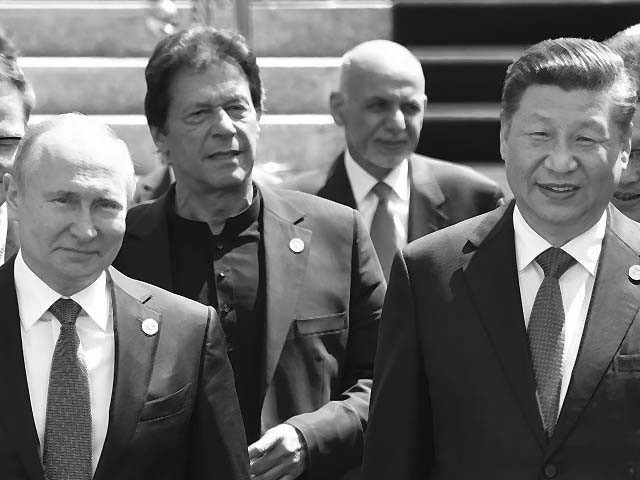
President Vladimir Putin, Prime Minister Imran Khan and President Xi Jinping at the SCO. PHOTO: AFP

How the US, China, India, Pakistan and Russia are reshaping South Asia

America is expected to hype up the so-called “China threat” to reassure India of its commitment to the “Old Quad”

Andrew KorybkoJuly 31, 2021

South Asia has emerged as the convergence point of American, Chinese, and Russian interests in the run-up to the US’ military withdrawal from Afghanistan by August 31st, which makes this region the most geo-strategically significant in the world right now. Those three Great Powers are actively working to shape the situation there in partnership with its two most influential stakeholders, India and Pakistan. The many interactions between the members of this “Quintet” in South Asia will greatly affect the future of the supercontinent and therefore the ong-oing New Cold War between the American and Chinese superpowers considering the region’s significance. The present analysis aims to simplify these complex dynamics for the benefit of the average observer and thus help everyone better understand the importance of what’s happening right now.

The state of affairs is rapidly changing but it’s still possible to identify a few top trends. These are the transition from geopolitics to geo-economics; America’s & Russia’s efforts to balance between India & Pakistan; and America’s, China’s, and Russia’s cautious welcoming of the Taliban into the international community. The most recent developments of relevance are February’s agreement to build a Pakistan-Afghanistan-Uzbekistan (PAKAFUZ) railway; Russian Foreign Minister Sergey Lavrov’s regional sojourn in early April; mid-July’s Tashkent conference about Central Asia-South Asia connectivity; the US’ “New Quad” with the PAKAFUZ states; US Secretary of State Antony Blinken’s trip to India; the Taliban’s latest travels to China; and Pakistani National Security Advisor Moeed Yusuf’s and Director-General ISI Lt. General Faiz Hameed’s trip to the US.

In the order that they were mentioned, the top trends’ significance is that: the Great Powers are focusing on friendly geo-economic competition in the Eurasian Heartland; which necessitates America & Russia working more closely with India & Pakistan in this pivotal region; as facilitated by those first two’s and China’s pragmatic relations with the Taliban. With respect to the developments of relevance, they’re significant because: PAKAFUZ is the vehicle for bringing this about; Russia successfully restored balance to its South Asian strategy this spring; everyone except India tacitly supports PAKAFUZ; the US’ “New Quad” shows the seriousness of its planned geo-economic engagement; the US wants to allay India’s concerns about the aforementioned; the Taliban will welcome more Belt & Road Initiative (BRI) investments; and Pakistan wants to strengthen its ties with the US.

The only realistic spoiler in this scenario is India because: it hitherto thus far refuses to enter into public contact with the Taliban; which in turn excludes it from the Extended Troika format of America, China, Pakistan, and Russia in Afghanistan which requires all participants to have ties with both warring parties; and increases the risk that New Delhi might extend more military support to Kabul to perpetuate its proxy war against the Taliban; so as to indefinitely delay the planned post-war implementation of the PAKAFUZ project which serves as the most tangible example of convergence between America, China, Pakistan, and Russia. The ideal solution is for India to be encouraged by its American and Russian allies to publicly talk to the Taliban so that New Delhi can then participate in the Extended Troika and consequently defend and expand its relevant economic interests.

The path to the implementation of that proposal is in progress but its ultimate outcome is still uncertain because: India feels very uncomfortable with its historical Russian ally recently getting so close to the Taliban; seriously distrusts its new American ally’s strategic intentions with the “New Quad” considering Pakistan’s key role in it; and expects to provoke a domestic political scandal if its incumbent Hindu nationalist government enters into public talks with the same Taliban that the BJP condemned as terrorists for years. These perceptions are responsible for India’s regional strategy having yet to fully evolve from geopolitics to geo-economics like America’s, China’s, Pakistan‘s, and Russia‘s have, which makes it an unpredictable outlier among this Quintet’s members since the advancement of its geopolitical goals might undermine their geo-economic ones.

China and Pakistan are incapable of exerting positive influence over India since they’re both its rivals so this responsibility naturally falls upon America and Russia. America is expected to hype up the so-called “China threat” in order to reassure India of its commitment to the “Old Quad” whose raison d’etre is widely considered to be predicated upon the shared goal of “containing” the People’s Republic. This geopolitical appeal is intended to convince India that the US hasn’t abandoned it by partnering with Pakistan through the geo-economically driven “New Quad”. Regarding Russia, it’s expected to double down on its geo-economic outreaches to India by inviting it to invest more in the Eurasian Great Powers’ resource-rich Arctic and Far Eastern regions to show its historically ally that it too hasn’t abandoned New Delhi by supporting PAKAFUZ.

America and Russia hope that their uncoordinated but nevertheless coincidentally timed respective geopolitical and geo-economic outreaches to India can convince the South Asian state not to behave as a spoiler and consequently sabotage their similar vision for the region through the game-changing Afghan-transiting PAKAFUZ project. Be that as it may, cynical observers are correct in pointing out that the US could strategically afford to sit out on the PAKAFUZ opportunity for now while its new Indian ally sabotages that project for as long as possible in order to undermine the more urgent related goals of America’s Chinese and Russian rivals. Even so, India arguably lacks the capabilities to do so for all that long which means that America would have to geo-economically compete those two there sooner than later, hence why it might not support that scenario.

Indian decision makers would also have to keep in mind that actively obstructing PAKAFUZ through the potential intensification of their proxy war against the Taliban via more military assistance to Kabul would provoke distrust from their historical Russian ally. This could lead to unpredictable long-term strategic consequences if Russia recalibrates its ever-evolving balancing act between India and China by moving closer towards Beijing in response to possibly perceiving of New Delhi as a regionally destabilising US proxy state for dividing and ruling the Eurasian Heartland due to its geopolitical obsession with zero-sum outcomes. While this would be to America’s comparative advantage, pushing India in that direction might be counterproductive if New Delhi already anticipates such a negative outcome and thus suspects Washington of setting it up to fail.

America is also in a tricky strategic position since its repeated threats to sanction India if it goes through with its planned purchase of Russia’s S-400 air defence systems hang heavy over everyone’s heads like a Damocles’ sword. It might be impossible for the US to not impose some sort of sanctions after all the drama that it’s made over this issue otherwise it would risk “losing face”, but substantive ones would worsen its ties with India by pushing it even closer into Russia’s arms so symbolic ones might be a suitable enough “compromise” in order to not ruin bilateral relations with New Delhi and thus inadvertently undermine the “Old Quad’s” anti-Chinese geopolitical purpose by none other than Washington’s own hand. The influence of the S-400 sanctions factor on the overall strategic situation in South Asia is thus more important than some observers might have thought.

As it stands, all of these complex interactions are mostly occurring bilaterally apart from the multilateral political efforts undertaken by the Extended Troika (America, China, Pakistan, and Russia) in Afghanistan. In the best-case scenario, these four countries and India would come together through a single platform in order to more effectively shape the future of South Asia. This would be similar in spirit to the quadrilateral nuclear powers framework that well-respected Valdai Club expert Andrey Sushentsov proposed in June but which the author of this present article argued during that time should be expanded to include Pakistan too. The first practical step in that direction would be if America and Russia successfully convinced India to publicly talk to the Taliban and therefore enabled it to join the Extended Troika.

Upon that happening, this Quintet could then expand the scope of their negotiations to discuss the broader future of “Greater South Asia”, which in this context includes Central Asia seeing as how PAKAFUZ will eventually integrate those two regions into a single one for all strategic intents and purposes. Failing the formation of a platform for bringing together the Quintet’s top South Asian stakeholders, interactions between them will remain limited and thus risk resulting in contradictions that could be counterproductive for their collective interests. Although some in India might think that their grand strategic goals could be advanced by spoiling the PAKAFUZ project that it’s thus far voluntarily isolated itself from, this would be a dangerous illusion since their obstructive efforts would just be temporary and only isolate India even more from all stakeholders.

WRITTEN BY:
Andrew Korybko

The writer is an American Moscow-based political analyst specialising in the relationship between the US strategy in Afro-Eurasia, China’s One Belt One Road global vision of New Silk Road connectivity, and Hybrid Warfare. He tweets at @AKORYBKO

Ibrahim Moiz - A brief history of the spin Boldak Conflict

A brief history of the spin boldack conflict


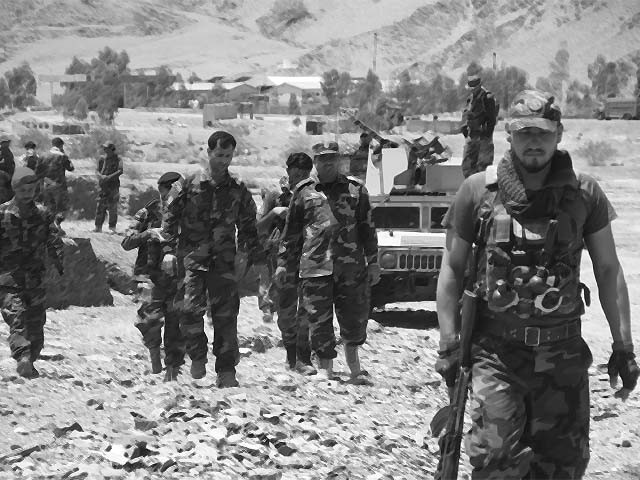
Afghan security forces. PHOTO: AFP

A brief history of the Spin Boldak conflict

Spin Boldak has long played an outsize role in the trajectory of Afghan politics

Ibrahim MoizJuly 30, 2021

The Taliban’s quest to take over Afghanistan saw another twist in the eventful tale of the Kandahari town Spin Boldak, overseeing the border with Pakistan’s Balochistan province. The white desert after which the town is named has seen its fair share of bloodshed in the last few decades: Spin Boldak has played an important role in the recent history of Afghanistan-Pakistan relations, the Taliban movement, and clan-related conflict.

A strategic post

Spin Boldak sits a stone’s throw away from the Pakistani town Chaman, a largely Pakhtun settlement whose population has boomed in the last few decades with refugees and militants alike from Afghanistan. During and between the Soviet and American invasions of Afghanistan, Spin Boldak and Chaman derived importance from this proximity, the importance to the border for smugglers, and the fact that insurgents from one country could recuperate and reorganize in the other. The region is also home to a number of major Pakhtun clans, and in unison with the recent wars has seen considerable competition between the Achakzai and Nurzai clans that plays into and is played upon by the wider war.

Spin Boldak during the Soviet invasion

During the Soviet invasion of Afghanistan, Spin Boldak was the stronghold of flamboyant Achakzai adventurer Ismatullah Muslim, who founded the militia ostensibly to fight the Soviet-backed regime before joining it. Sadistic, unscrupulous, and fiercely autonomous, the common denominator in Ismatullah’s career was his autonomy and the importance he placed in extracting Spin Boldak’s strategic location for his Achakzai fighters’ interests.

Because support to the Afghan insurgency required enlistment in one of the Peshawar-based mujahideen parties, Ismatullah – a former airforce officer who had once fallen foul of the Soviet Union for professional indiscipline – grudgingly joined the royalist Mahaz party led by the Sufi Gaillani family. In 1984 he switched sides and joined the regime, who promoted him to commander for not only Spin Boldak but increasingly the rest of Kandahar. This brought with it disastrous, bloody feuding against insurgent fronts that took on a clan nature.

The Afghan regime had little more luck in controlling Ismatullah than their opponents had – he was put under a brief house arrest after a shootout, but by 1988 he had been released in order to confront an insurgent attack on Spin Boldak. The insurgents were split over how to deal with the militia; the Mahaz party favoured cutting a deal, but Sarkatib Atta from the Hizb party favoured an attack. Throughout the summer, Atta attacked the Achakzai militia. But with little success and the war winding down the Pakistani liaison with the insurgency, Raza Ali, instead backed Ismatullah’s opponents from the Nurzai clan. Led by Ghulam Farouq, they succeeded in driving the Achakzai militia from its lair.

Spin Boldak in between occupations

Mujahideen-communist distinctions blurred in the civil war that accompanied the regime’s downfall in April 1992. In such provinces as Kandahar, a safe distance from the civil war’s epicentre at Kabul, militias freed of central oversight and requiring funds to operate largely turned to banditry of the sort for which the Achakzai militia was reknowned. With Ismatullah having succumbed to a sickness, his cousin Mansur Khan took over a militia that was now one among many in the area.

The misrule that followed, whose side-effects included inconveniencing Pashtun merchants on the border, helped provoke a revolt by Islamic students into the Taliban movement. These networks had been mobilising for some months when in October 1994 Pakistani interior minister Naseerullah Babar, trying to open a trade route into Central Asia, led a convoy across the border that was promptly waylaid at Spin Boldak by militia commanders including Mansur and, ironically enough, Pakistan’s old Hizb partner Atta. They were rescued, however, when a Taliban force swooped in and scattered the militias, before going on and seizing Kandahar city. Thus Spin Boldak played a major role in the foundation of the Taliban emirate, as well as Pakistani support – an impressed Babar, who had trained Afghan militants, proudly if misleadingly hailing the movement as “our boys”.

The Taliban loathed Ismatullah’s militia – they famously hung the corpse of Mansur Khan off a tank in order to intimidate other militias – and this was particularly compounded for the emirate’s Nurzai commanders, with sheriff Hafiz Abdul-Majeed reportedly excavating Ismatullah’s grave. Spin Boldak’s garrison was entrusted to another Nurzai commander, Hafiz Abdul-Rahim, a veteran of the Nurzai front that had captured the town from Ismatullah in 1988.

Spin Boldak under America: The militia revived

The United States’ campaign hinged on supporting various militias against the Taliban emirate. In northern Afghanistan, organised opposition had been bubbling for years, but in the south long-inactive militia commanders jumped at their chance. Among the most prized such commanders was Abdul-Raziq Khan, a kinsman of Ismatullah and Mansur, who reactivated the militia in support of the American march on Kandahar. Inheriting Ismatullah’s combination of charisma and cruelty, he would become the Americans’ most prized and controversial vassal in the south.

In November 2001 Abdul-Raziq and the Americans bulldozed through Spin Boldak, brushing aside Hafiz Abdul-Rahim before their march on Kandahar. Back in the ascendancy and armed with American orders to capture or kill Taliban fighters, the Achakzai militia eagerly set about persecuting Spin Boldak’s Nurzai community as Taliban sympathizers. This vindictive behaviour played a major role in provoking Taliban fighters, many of whom had retired after the emirate’s downfall, into insurgency. For Spin Boldak’s Nurzai, it seemed to have become nearly a matter of survival.

Just as Spin Boldak had been the first scene of the Taliban emirate in 1994, it became the launchpad of the war against the United States. Though the insurgency was not exactly a clan-specific phenomenon – their leading commander at Spin Boldak, Taliban interior minister Abdul-Razzaq Akhundzada, also belonged to the Achakzai clan – they certainly benefited from Nurzai grievances against the Achakzai militia. A disproportionate number of their commanders in Kandahar were Nurzais; these included both Abdul-Rahim, who lost his life in combat, and Abdul-Majeed. Abdul-Raziq’s predation reinforced their narrative that the invasion had brought a return of corruption and abuse.

Old patterns repeated themselves. Much as the communists had promoted Ismatullah beyond Spin Boldak to Kandahar province in the 1980s, so did Canadian troops in 2006 and American troops in 2010 with Abdul-Raziq. On each occasion, such Taliban Nurzai commanders as Abdul-Majeed galvanised their community to fight the militia’s encroachment.

That he was nonetheless persisted with spoke to not only the United States’ uses for Abdul-Raziq, but also Kabul’s. As in the 1980s, Afghan intelligence had quietly harboured Baloch ethnonationalists waging a low-scale insurgency against Pakistan, who in turn harboured the Taliban at Quetta and Chaman. In May 2017 this border war-within-a-war escalated when Abdul-Raziq crossed the border and attacked Chaman, only to be beaten off by Pakistani paramilitary commander Nadeem Anjum. In 2018 the Taliban assassinated Abdul-Raziq; since then, at least two major Baloch rebels, Aslam Achu and Mir Nabi, have been killed in Kandahar.

Conclusion

Spin Boldak has long played an outsized role in the trajectory of Afghan politics. Though his brutality was no secret, the United States and the Afghan government valued Abdul-Raziq’s ferocity in the area enough for him to remain ensconced as sheriff for nearly half of his forty years. His brother Tajuddin, who took over the militia, lost his stronghold earlier this month when Spin Boldak was finally overrun by the insurgents. Whether this leads to more cyclical recriminations is unclear but to be firmly hoped against. The sands of Kandahar’s White Desert have too long run red.

WRITTEN BY:
Ibrahim Moiz

The writer has studied contemporary conflict with a particular focus on Afghanistan and Syria from the University of Toronto. He tweets @SYEDIBRAHIM1137.